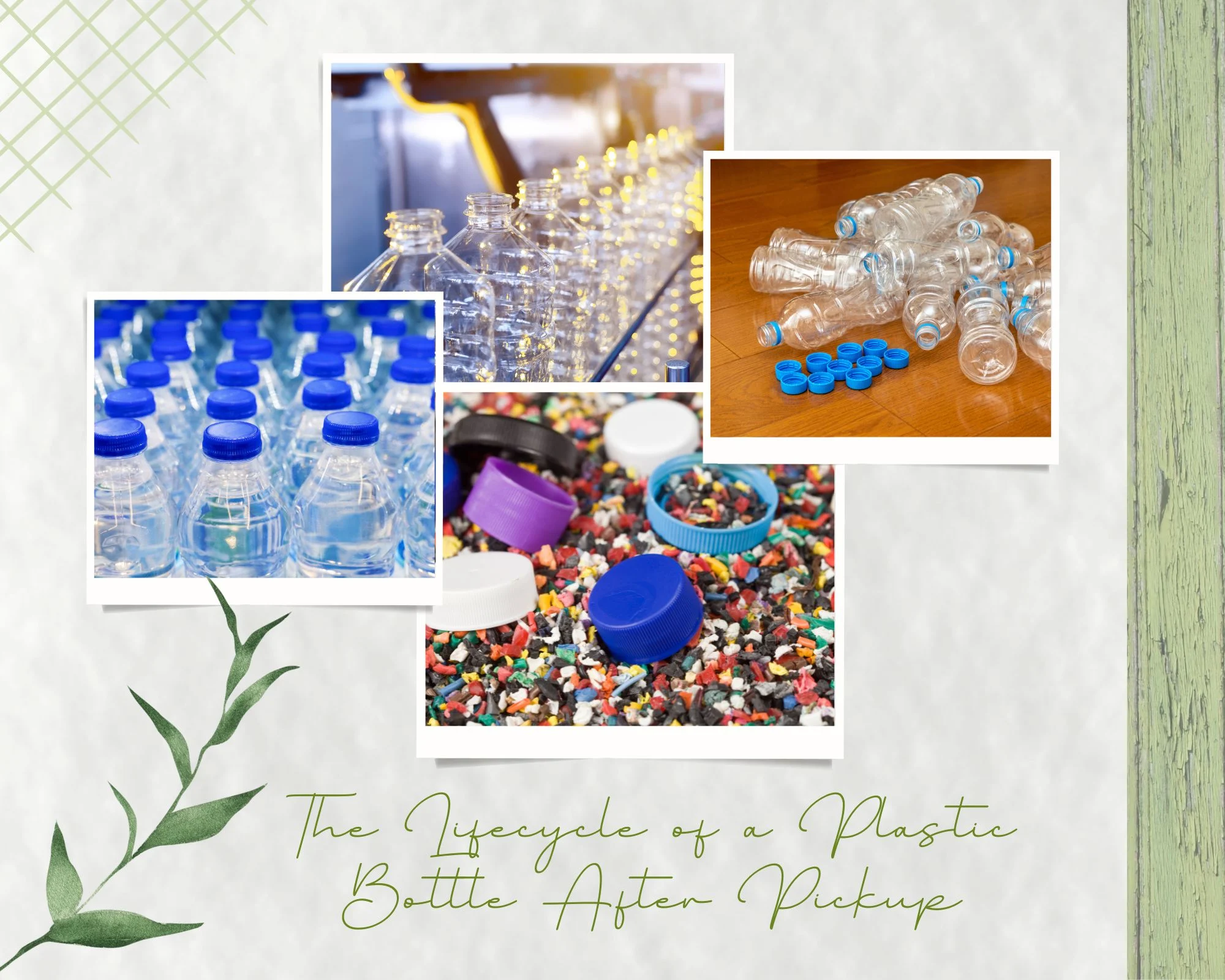
The Lifecycle of a Plastic Bottle After Pickup
Most people toss a plastic bottle into the recycling bin and assume the job is done. But that simple action starts a surprisingly long journey. From the moment it leaves your community to the moment it becomes a new product, a plastic bottle passes through multiple facilities, machines, and quality checks. Understanding this process helps residents recycle better and helps communities avoid contamination that can send recyclables straight to the landfill.
Step 1: Collection and Transportation
After pickup, recycling trucks transport collected materials to a Materials Recovery Facility (MRF). These facilities handle tons of mixed recyclables every day — paper, cardboard, metal, glass, and plastics all arrive together.
At this stage, contamination matters. Loose food, liquids, or trash inside bags can ruin entire loads. If contamination levels are too high, the entire truck may be rejected and sent to a landfill.
Tip for residents: always empty and rinse bottles. Caps can usually stay on unless local rules say otherwise.
Step 2: Sorting the Plastic
Once inside the facility, bottles move onto conveyor belts where they go through multiple sorting systems. Screens separate flat items like paper from containers. Magnets remove metals. Optical scanners identify plastic types, and air jets push different plastics into separate streams.
Plastic bottles are usually made from PET (#1 plastic), one of the most valuable and widely recyclable materials.
Workers also manually remove contamination that machines miss. Plastic bags, food waste, and clothing are some of the biggest problems and frequently jam equipment.
Step 3: Cleaning and Shredding
After sorting, the plastic bottles are compressed into bales and sent to processing plants where they are washed in hot water and detergents, labels and glue are removed, the material is ground into small flakes, and then dried and melted. At this point the flakes are now raw material rather than trash.
Step 4: Pelletizing and Manufacturing
The melted plastic is turned into tiny pellets called resin pellets. Manufacturers buy these pellets to create new products such as beverage bottles, clothing fibers, carpeting, food containers, and packaging materials. Your water bottle could literally become part of a jacket or another bottle within months.
Step 5: Back on the Shelf
Once manufactured into a new product, the material re-enters the market. When recycled correctly, a plastic bottle can be reused multiple times, significantly reducing energy use and petroleum demand compared to making new plastic.
Why Proper Recycling Matters
Every contaminated bin increases costs, slows processing, and can cause entire recyclable loads to be discarded. For multifamily communities, this leads to overflowing dumpsters, higher hauling fees, and unnecessary landfill waste.
Small habits make a major difference: empty liquids, rinse quickly, do not bag recyclables, and keep food and trash out of recycling bins.
The Big Picture
Recycling isn’t a single action — it’s a chain of events. The bottle you toss today depends on dozens of people and machines to be reused tomorrow. When residents recycle correctly, they help keep the system working, reduce community waste costs, and protect landfill space. One bottle seems small, but multiplied by hundreds of residents every day, it becomes one of the most important parts of modern waste management.
Share This Story, Choose Your Platform!
The Lifecycle of a Plastic Bottle After Pickup
Most people toss a plastic bottle into the recycling bin and assume the job is done. But that simple action starts a surprisingly long journey. From the moment it leaves your community to the moment it becomes a new product, a plastic bottle passes through multiple facilities, machines, and quality checks. Understanding this process helps residents recycle better and helps communities avoid contamination that can send recyclables straight to the landfill.
Step 1: Collection and Transportation
After pickup, recycling trucks transport collected materials to a Materials Recovery Facility (MRF). These facilities handle tons of mixed recyclables every day — paper, cardboard, metal, glass, and plastics all arrive together.
At this stage, contamination matters. Loose food, liquids, or trash inside bags can ruin entire loads. If contamination levels are too high, the entire truck may be rejected and sent to a landfill.
Tip for residents: always empty and rinse bottles. Caps can usually stay on unless local rules say otherwise.
Step 2: Sorting the Plastic
Once inside the facility, bottles move onto conveyor belts where they go through multiple sorting systems. Screens separate flat items like paper from containers. Magnets remove metals. Optical scanners identify plastic types, and air jets push different plastics into separate streams.
Plastic bottles are usually made from PET (#1 plastic), one of the most valuable and widely recyclable materials.
Workers also manually remove contamination that machines miss. Plastic bags, food waste, and clothing are some of the biggest problems and frequently jam equipment.
Step 3: Cleaning and Shredding
After sorting, the plastic bottles are compressed into bales and sent to processing plants where they are washed in hot water and detergents, labels and glue are removed, the material is ground into small flakes, and then dried and melted. At this point the flakes are now raw material rather than trash.
Step 4: Pelletizing and Manufacturing
The melted plastic is turned into tiny pellets called resin pellets. Manufacturers buy these pellets to create new products such as beverage bottles, clothing fibers, carpeting, food containers, and packaging materials. Your water bottle could literally become part of a jacket or another bottle within months.
Step 5: Back on the Shelf
Once manufactured into a new product, the material re-enters the market. When recycled correctly, a plastic bottle can be reused multiple times, significantly reducing energy use and petroleum demand compared to making new plastic.
Why Proper Recycling Matters
Every contaminated bin increases costs, slows processing, and can cause entire recyclable loads to be discarded. For multifamily communities, this leads to overflowing dumpsters, higher hauling fees, and unnecessary landfill waste.
Small habits make a major difference: empty liquids, rinse quickly, do not bag recyclables, and keep food and trash out of recycling bins.
The Big Picture
Recycling isn’t a single action — it’s a chain of events. The bottle you toss today depends on dozens of people and machines to be reused tomorrow. When residents recycle correctly, they help keep the system working, reduce community waste costs, and protect landfill space. One bottle seems small, but multiplied by hundreds of residents every day, it becomes one of the most important parts of modern waste management.