Why Loose Trash Causes Bigger Curbside Problems
Most people don’t think twice about tossing a few loose items into a trash bin. A fast-food wrapper, empty drink cup, or handful of packing material may not seem like a big deal at the time. But when loose trash isn’t properly bagged or secured, it can quickly create larger problems for residents, property managers, trash valet teams, and the surrounding community.
At first glance, loose trash may appear harmless. In reality, it contributes to overflowing dumpsters, litter around apartment communities, pest problems, unpleasant odors, and even safety hazards for sanitation workers. Whether you live in an apartment complex or manage a residential property, understanding the impact of loose trash can help keep your community cleaner and more efficient.
Loose Trash Easily Becomes Litter
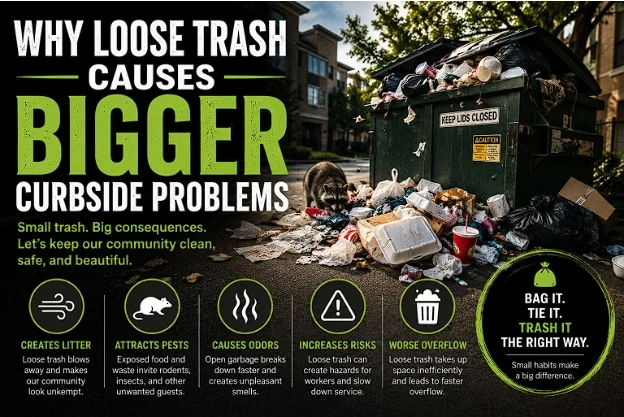
One of the biggest problems with loose trash is how easily it escapes during collection and transport. Lightweight items like napkins, paper plates, plastic bags, receipts, and food containers can blow away with even a small gust of wind.
When trash is left loose beside dumpsters or inside overflowing bins, it often ends up scattered across parking lots, sidewalks, grassy areas, and nearby streets. This not only makes the property look unkempt but also creates extra cleanup work for maintenance staff and valet trash teams.
Communities with frequent litter problems may also experience more resident complaints and negative impressions from guests or prospective tenants.
Loose Garbage Attracts Pests
Food waste that is not properly sealed inside a trash bag becomes an open invitation for pests. Rodents, raccoons, insects, and stray animals are naturally drawn to exposed garbage.
Once pests begin gathering around trash areas, the issue can spread quickly throughout an apartment community. Overflowing dumpsters and scattered food waste can increase the chances of infestations near buildings, breezeways, and common areas.
Properly bagging trash helps contain food odors and reduces easy access for pests searching for a meal.
It Creates More Odors Around the Property
Loose garbage also contributes to stronger and longer-lasting odors. Open food containers, spilled liquids, and exposed waste begin breaking down quickly, especially during warmer months.
When trash bags are tied securely, odors stay more contained until collection. Loose trash, however, leaves smells exposed to the surrounding environment. This can make dumpster areas unpleasant for both residents and staff.
Apartment communities that prioritize proper waste disposal practices often maintain cleaner, fresher common areas overall.
Safety Risks Increase for Collection Teams
Trash valet workers and sanitation teams deal with hundreds of bags and containers every day. Loose trash slows down the collection process and increases safety concerns.
Sharp objects, broken glass, leaking liquids, and scattered debris can create hazards during pickup. Workers may also need to spend extra time collecting loose items by hand, increasing exposure to unsanitary materials.
Simple habits like securely bagging waste and avoiding overfilled containers help protect everyone involved in the collection process.
Overflow Problems Get Worse Faster
Loose trash takes up space inefficiently inside dumpsters and compactors. Without proper bagging, trash shifts around more easily and creates uneven piles that fill containers faster.
Overflowing dumpsters not only look bad but can also lead to additional hauling costs, service delays, and sanitation concerns. Once overflow begins, loose debris often spreads around the surrounding area even more quickly.
Keeping trash securely bagged helps maximize available dumpster space and supports smoother waste collection operations.
Small Habits Make a Big Difference
Preventing curbside trash problems often comes down to simple daily habits. Properly bagging waste, tying bags securely, and breaking down boxes before disposal can significantly reduce litter, odors, pests, and overflow issues.
For apartment communities, encouraging residents to follow basic disposal guidelines helps create a cleaner environment for everyone. Trash valet services also operate more efficiently when waste is properly prepared for pickup.
At the end of the day, loose trash creates more work, more mess, and more problems than many people realize. A little extra effort before disposal goes a long way toward keeping communities cleaner, safer, and more enjoyable for residents and staff alike.
Share This Story, Choose Your Platform!
Why Loose Trash Causes Bigger Curbside Problems
Most people don’t think twice about tossing a few loose items into a trash bin. A fast-food wrapper, empty drink cup, or handful of packing material may not seem like a big deal at the time. But when loose trash isn’t properly bagged or secured, it can quickly create larger problems for residents, property managers, trash valet teams, and the surrounding community.
At first glance, loose trash may appear harmless. In reality, it contributes to overflowing dumpsters, litter around apartment communities, pest problems, unpleasant odors, and even safety hazards for sanitation workers. Whether you live in an apartment complex or manage a residential property, understanding the impact of loose trash can help keep your community cleaner and more efficient.
Loose Trash Easily Becomes Litter
One of the biggest problems with loose trash is how easily it escapes during collection and transport. Lightweight items like napkins, paper plates, plastic bags, receipts, and food containers can blow away with even a small gust of wind.
When trash is left loose beside dumpsters or inside overflowing bins, it often ends up scattered across parking lots, sidewalks, grassy areas, and nearby streets. This not only makes the property look unkempt but also creates extra cleanup work for maintenance staff and valet trash teams.
Communities with frequent litter problems may also experience more resident complaints and negative impressions from guests or prospective tenants.
Loose Garbage Attracts Pests
Food waste that is not properly sealed inside a trash bag becomes an open invitation for pests. Rodents, raccoons, insects, and stray animals are naturally drawn to exposed garbage.
Once pests begin gathering around trash areas, the issue can spread quickly throughout an apartment community. Overflowing dumpsters and scattered food waste can increase the chances of infestations near buildings, breezeways, and common areas.
Properly bagging trash helps contain food odors and reduces easy access for pests searching for a meal.
It Creates More Odors Around the Property
Loose garbage also contributes to stronger and longer-lasting odors. Open food containers, spilled liquids, and exposed waste begin breaking down quickly, especially during warmer months.
When trash bags are tied securely, odors stay more contained until collection. Loose trash, however, leaves smells exposed to the surrounding environment. This can make dumpster areas unpleasant for both residents and staff.
Apartment communities that prioritize proper waste disposal practices often maintain cleaner, fresher common areas overall.
Safety Risks Increase for Collection Teams
Trash valet workers and sanitation teams deal with hundreds of bags and containers every day. Loose trash slows down the collection process and increases safety concerns.
Sharp objects, broken glass, leaking liquids, and scattered debris can create hazards during pickup. Workers may also need to spend extra time collecting loose items by hand, increasing exposure to unsanitary materials.
Simple habits like securely bagging waste and avoiding overfilled containers help protect everyone involved in the collection process.
Overflow Problems Get Worse Faster
Loose trash takes up space inefficiently inside dumpsters and compactors. Without proper bagging, trash shifts around more easily and creates uneven piles that fill containers faster.
Overflowing dumpsters not only look bad but can also lead to additional hauling costs, service delays, and sanitation concerns. Once overflow begins, loose debris often spreads around the surrounding area even more quickly.
Keeping trash securely bagged helps maximize available dumpster space and supports smoother waste collection operations.
Small Habits Make a Big Difference
Preventing curbside trash problems often comes down to simple daily habits. Properly bagging waste, tying bags securely, and breaking down boxes before disposal can significantly reduce litter, odors, pests, and overflow issues.
For apartment communities, encouraging residents to follow basic disposal guidelines helps create a cleaner environment for everyone. Trash valet services also operate more efficiently when waste is properly prepared for pickup.
At the end of the day, loose trash creates more work, more mess, and more problems than many people realize. A little extra effort before disposal goes a long way toward keeping communities cleaner, safer, and more enjoyable for residents and staff alike.